I went to the barbershop yesterday. I figure if I’m going to keep my hair short I can go regularly to have it done by a professional. The barber is actually my new boss’s husband. They don’t talk a lot about work at home, so I think I’m one way he can keep up on what’s happening. It’s a single chair shop, with chairs for waiting customers lined up against one wall, and the requisite “Field and Stream” magazines in the corner. Mike’s shop feels like the barbershops I’d go to as a kid, before there were shops full of stylists where men would go.
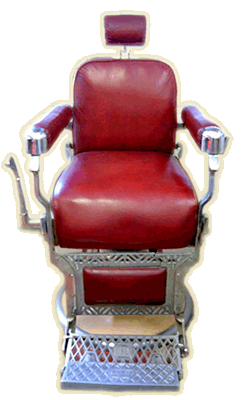 There’s a particular protocol in a barbershop. It may differ from shop to shop, but especially here, it’s clear that Mike is running the show. He makes everyone feel welcome, but he controls the clippers, the chair, and the drape, so like I said, it’s his show. He opens at 8. The frustrating thing about a barbershop like is that you don’t make an appointment. Some days, I don’t mind sitting through three other haircuts, listening to the conversation and catching up on small town gossip. But other days I’m not feeling as social, or don’t have the time. So I’ll drive by, looking in the window to see what the wait is like. Other times I’ll go first thing in the morning, hoping to catch him right when he opens before anyone else gets there. He opens at 8:00, so I feel part of the etiquette is that I can come 5 minutes before 8:00, and see if he’s there and has the door unlocked yet. He’s always there, and always says it’s fine I’m early.
Yesterday I got there at my usual couple of minutes before 8:00 and he already had someone in the chair. Not only was there someone in the chair, but they were damn near done with their cut. “That takes some balls,” I thought to myself. All that was left was the straight razor trim across the back of his neck, the dusting brush, and the heavy vibrating massager across his shoulders. Mike is a master at remembering people, and asking questions to keep the conversation going. In the few minutes waiting I heard about how this old guy had driven his 10 year old truck down that only has 38,000 miles on it, how he’d had a slight fender bender in this icy winter we’re having, and how he would be heading up to the legion later that day for a few cans of beer, some soup, and some cards. I also heard how he’d once had jet-black hair, as did his father. And that his mother’s hair was red and his brother’s was more of a brown.
So finally the cut was finished, the cape removed, and with a little bit of slowness he stood up, talking about how it was harder to walk as he got older.
“How old are you again, Blackie?” asked Mike.
“93!” he answered.
Then Blackie turned to me and said, “Well, get up here in the chair! You’re next!”
As I said, Mike runs the show, and that’s usually the barber’s line, but Mike didn’t seem to mind. So I took my seat, and Blackie paid mike. The other part of the etiquette is when you’re done, you move on out the door, so the barber can focus on the next customer. He asks the customer how he’s doing, what kind of cut he wants, as he puts the cape on them and the length of toilet paper around their neck. (This may speak to men’s general inertia, but the answer to the cut question is always, “Let’s stick with what we’ve been doing.” Never in a barber shop do you hear, “Let’s try something new,” or, “I’m thinking of going a different color, “or, “I’d like to try to go for the style that actor in that movie had.”
But anyway, in this case, Blackie stood before me as Mike asked what I wanted. He cocked his head and squinted his eyes….”What are you going to have him cut? How can you get that hair any shorter!?” I laughed and he said, “Oh wait,” as he opened his eyes a little bigger. “Maybe there is a ¼ of an inch on top there!” Then he laid his large hand heavily on top of my head, and rubbed back across my crown. “He’ll have to have to take the buzzer and just do like this,” Blackie said while running that hand back and forth through my hair. Satisfied he’d given me enough of a hard time, he turned, commenting on the fact that Mike’s door was finally working better and not sticking, and went out to his truck.
I was still a little in shock at that intrusion. I’m not accustomed to having total strangers put their hand on my head and rub my hair around. But I also thought, “Damn, I hope I make it to 93, and am half as sharp as Blackie.” I thought of how I like the old guys in this shop, and the irony in that thought only occurred to me later as I was leaving–that I’m in the fraternity of old guys and getting deeper into it every day.
I was surprised at all that he’d gotten away with that I would hesitate to do even now. Coming so early to have Mike open the shop a half hour before opening time. Telling me to get in the chair. Rubbing his hand over my head. I wondered if he’d always had such an expansive presence. Or if this was part of living to that age, that you just don’t have the time to give a shit what other people think of you.
And I thought back to when I’d go to the Y years ago to exercise. There was a class at the same time I was there for men who’d had heart attacks, or heart surgery. I marveled at them in the locker room when I’d go in to shower after my work out. Their lack of self-consciousness at the incision scars down their chests. The translucence of their skin. I’d notice it in their hands like some exotic orchid and then, in the locker room, in their genitals–penises and testicles, delicate and otherworldly as jelly fish, seemingly lit by a light from within.
It seems if we live long enough, that goal of practice we have just occurs to some people without even trying?. One becomes intimate, transparent, both in their body and spirit. Moving through the world fearlessly, with nothing left to lose any longer, simply being who they are. I think of the line from a poem by Gary Snyder: “This life: we get old enough and finally really like it.”
Or even better…I’ve been reading and studying in Victor Sogen Hori’s book, “Zen Sand” on capping phrases for koan practice. I finished this writing, opened to the last page and find this:
At fifteen, I had my mind bent on learning.
At thirty, I stood firm.
At forty, I had no doubts.
At fifty, I knew the decrees of heaven
At sixty, my ear was an obedient organ.
At seventy, I could follow what my heart desired, without transgressing what was right.
Analects, II, 4. Translated by Legge.


