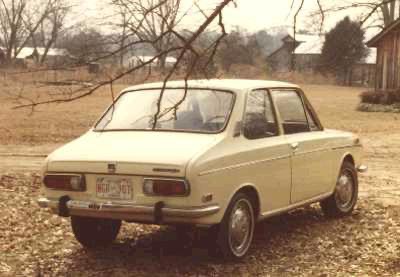
Hui-neng, 6th Century Zen teacher, said, “The physical body is a house, but you can’t rely on it.”* And I say, the body is a car, and we all know you can’t depend on a car.
You find that one aspect of getting older is all the ways this body starts to wear out. “Suffering is old age, sickness, and death,” according to Buddha. And even the healthiest of us can’t avoid it forever. In my more generous moments I can see it’s part of the adventure of living this life in these meat suits, as my friend David puts it. And this wearing out is mostly all the usual and ordinary problems – hair thinning, skin thinning, joints becoming less flexible.
I had an old back injury flare up a year ago after a doctor gave me antibiotics for diverticulitis, which also often is a result of aging. The antibiotic caused serious tendinitis in my Achilles tendon, so that I had difficulty walking. Talking with the physical therapist I worked with on for my recovery, he said there was some “deconditioning due to the tendinitis and lack of movement,” which exacerbated the old injury. He called it “wear and tear.” Which sounds like what your mechanic might tell you about your brakes.
Many years before that my hip was causing me lots of pain, probably due in part to that wear and tear in my back. It turned out there was a great deal of arthritis in my hip, and I finally realized I had to have it replaced with an artificial joint. Beforehand, the doctor showed me what the replacement joint looked like – it was titanium, shiny and new. And looked to me like nothing so much as a chrome car part.
I don’t always remain under anesthetic long, so at the end of that surgery I came to while I was still on the operating table. The doctor was the only person remaining in the operating room, and I began talking with him. In my woozy state, and out of strange curiosity, I asked if I could see the head of the femur. He took some tongs, and pulled what looked like a softball out of a five gallon bucket. It was smooth as a pearl, and he pointed out how bare it was, with no cartilage left on it. Afterwards, I wondered whether he thought I was asking to see it, like a customer would with his mechanic at the garage. Wanting to see the defective part while the car was still up on the lift, in order to check the wear and tear on the brake pads, to be sure that they really did need replacing.
My old friend Ted, who was my roommate for a time, and a writing practice partner, was also a mechanic. He worked on my car a few times. It was an old Subaru, and he managed to keep it running a little longer each time. Finally, it broke down on a longer trip, and I had it towed back home. I asked Ted if he could look at it, and he said he would. I came home that night to find he’d left me a note on the kitchen table: For sale–1969 Subaru. No working clutch. Would be a good car to push off the High Bridge into the Mississippi River. A lesson in radical acceptance and letting go.
Ted’s car was an old Honda Civic which, through the wonder of transferred titles and recalls, had two brand new bright yellow fenders on it to replace those that had disintegrated due to a design flaw, and were recalled. This was on a car where the whole thing was mostly rust more than anything else. He let me borrow it for a few days after my car died. Along with the keys, he handed me 3 pages of numbered instructions for driving it:
- First pull the detent for the clutch knob out to the second detent. Turn the engine over. Then move the clutch to the third detent and try it again. It should start then. If it doesn’t, repeat those steps.
- Don’t follow anyone one too closely, as the brakes are going out.
- Try not to use the heater if you can help it.
- You need to have the defrost on high to get any air to come out.
- (And my favorite:) The head gasket is starting to go, so when you first start it up, there will be a big cloud of smoke, vapor, and exhaust coming out of the tailpipe. It’s nothing to worry about. My suggestion is that you just drive away immediately and as fast as you can, so no one knows it’s coming from you. Drive it for a short distance–the engine will warm up and the smoke will stop.
Some days I feel like I’m working from a similar list as I begin the day.
- Don’t get out of bed and start moving too fast.
- Cataracts have been removed, so vision will be good, but takes a few minutes to get clear.
- The chassis is slightly bent, and will list to one side for a bit.
- Alignment of the jaw is off, so you will hear a clicking sound. It’s nothing to worry about.
- Get the hearing aids in quickly, and that should take care of the ringing in the ears.
- Yes, it does have some wear and tear, but after 69 years it is still on the road. My suggestion is that once you get it moving, take off as quickly as possible.
As Ted might say, leave what’s behind you as quickly as you can and keep moving. A few blocks and it should run fine for the rest of the day.
*Translation by Dosho Port, Roshi
 The Zen Path Through