tea for two

(with thanks to Simon for asking)

A discussion about Zen aesthetics on our online sangha, and a serendipitous stumbling across an article on Tomoe Katagiri’s teachings on sewing practice, got me thinking about her, particularly studying tea ceremony with her. I posted one little story, and a friend from the sangha asked if I’d tell a little more about it. You only have to ask me once!

Around 40 years ago some friends of mine, knowing I was studying Zen, went into a Japanese imports and art shop that was in downtown Minneapolis in those days looking for ideas for a birthday gift. When they told the proprietor I was a student of Zen, she asked if I was also a student of tea ceremony. They told her they weren’t sure, and she responded, “If he isn’t, he should be.”

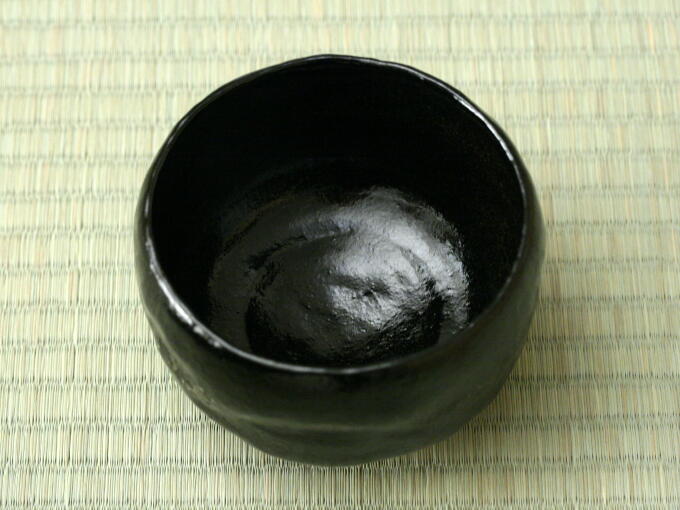
So, on my birthday I opened up a box containing a beautiful ceramic bowl, and some odd implements primarily made of wood or bamboo—a whisk, a ladle, and a small scoop. As I didn’t know much yet about tea ceremony, they read the look on my face and explained what the woman had told them. With the imperative added to her “he should be” they essentially said, “None of this was cheap, so you WILL be learning tea ceremony!”

With just a few questions, I discovered that Katagiri Roshi’s wife had studied tea ceremony, and could give lessons. I didn’t know Tomoe-san well. She was a slight woman with short hair and glasses, and an easy smile, who didn’t talk a whole lot. When she did it was in broken English, and mainly to the women around the Zen Center. My friend Catherine worked in the Asian Arts department at the Museum of Arts and also wanted to learn tea. Before I knew it the three of us were meeting regularly, one or two mornings a week after morning zazen and service, in an empty upstairs room in what was Tomoe and Katagiri Roshi’s apartment upstairs in the house. It was white walled, with tatami covering the floor. It was used by Roshi for dokusan during sesshins, so I’d been in there a few times before.

When I arrived for the first lesson, she had a large cast iron pot already filled with hot water, steaming into the room. A spot in front of it was laid out with the implements I’d recognized from my box, and she motioned to two spots across from her where we were to kneel and sit, both as students and guests, as she prepared the tea.

My first thought when asked to tell a little more about studying tea with Tomoe, was that it would be hard to tell much, as her method didn’t involve talking or explanation. For several classes we simply sat, watched her go through the elegant, simple motions of whisking up a bowl of frothed green tea, then I’d walk out into the bright day with the jolt of green tea opening my mind and eyes in a way coffee never had.

So though there are many stories I could tell about things Katagiri Roshi said, that was not really Tomoe’s way. She was not lecturing on the intricacies of Dogen or Madhyamika philosophy. She was showing us how to make a bowl of tea for a guest. She quietly supported Roshi’s teaching, and kept the place running, making zafus, zabutons and sometimes futons for sale. I remember the wonder of watching her set a futon cover on the floor, in the center of which there was a slit left open of about 12 inches, then laying layers of batting top of it until they were 4 to 5 inches thick, and covered the cover. Then, in a transformation I still can’t understand to this day, with a few flips and folds suddenly the batting which had been outside was on the inside, and with a few stitches and string through the layers to hold them in place, it was suddenly a futon.

My friend told me that most of the women there had mixed feelings about Tomoe. I can only take her word for it. For the men, both monks and lay students, she was sort of that quiet, bright face keeping things running, and taking care of Roshi. To the men and the women, what she was doing was seen as women’s work, I suppose. Plus, she didn’t sit with us often on the first floor. And they both were something of anachronisms to us Americans in the thick of the 70s. They had to both live up to our expectations of being modern, but also somehow carry themselves with that ancient tradition. I remember hearing how Katagiri loved to smoke cigarettes when he first starting working with Americans, but as they associated spirituality with health and purity, he finally had to quit because he was hounded by his students. (I also came to learn he had a fondness for whiskey and cashews, when Tomoe let slip she had to get that for him for his evening snack once.)

So, it’s possible that the women at the center too judged her, by her devotion to her husband, her quiet Japanese way of remaining in the background, and her in some ways staying out of the Buddhist goings on there. The women there were fighting sexism both in American culture, and in the Western Buddhist world, and saw her as a throwback.

To me she was just a sweet lady who raised her sons, and helped her husband as a pastor, not that different from generations of women who’d done the same here for their minister husbands. But that view changed pretty quickly as I watched her make tea. I couldn’t even understand what I was seeing in some ways, but when she knelt before the pot, and began to snap her cloth and measure the powdered tea, she was filled with the power and simplicity that defines the practice of tea.

She was extremely patient with me, with my large clumsy hands, and tendency to lose track of where I was in the ceremony. Her patience and ability to forgive were also tested a few years later when I was a tenzo (cook) at the center, and short of food for the 3rd bowl at a meal during a retreat. I grabbed a large bowl of what I thought was shredded cabbage in the fridge to make a third dish. I learned later from someone else, that it was shredded daikon radish to be used in a traditional new year’s meal Tomoe had been planning for quite some time. No word was ever said to me, but the next morning there was simply another container filled with the painstakingly prepared daikon.

And so, week after week, Catherine and I would go upstairs and go through the ritual of making a cup of that emerald green tea, until we could approximate her motions and attentiveness when she would do the same.

She had also studied ikebana, flower arranging. I can remember I’d put a single flower or bouquet that in a vase for decoration in the room, would look so clumsy and forlorn. Tomoe would take it, and in a matter of seconds move and rearrange the petals, stems, or leaves, seemingly imperceptibly. Suddenly it would reveal such beauty, as though she’d coaxed it into showing it’s true essence.

One morning after class, she turned to us and said, “We’re going to have a tea ceremony demonstration as a fundraiser for Zen Center.” “Ok, not so bad,” I thought. “She’ll do it and we’ll be there as the guests.” Then she added, “Phil, you’ll be the host for the ceremony.”

Now, I prided myself on having the almost same level of ability to say “no” without actually using the word, that the Japanese are famed for. “Tomoe-san, thank you for thinking of me, but really, Catherine is better at it than me. And if people will be paying for it, they should see someone really skilled at it, like you.” She smiled and didn’t say anything further. As I was leaving I thought, “Well, I successfully dodged that bullet.”

When I returned for class the following week, I took my usual place at the guest’s seat, and waited for her to sit and start the class. She smiled her same kind smile, and said, “Since you’re going to be the host in the demonstration, you should start practicing right now so you’re ready.”

I looked at her and saw two things clearly: Resistance was futile. And she was right–since I was going to be the host, I’d better get practicing!

On a Sunday afternoon a few weeks later, the zendo was filled with an audience there to watch a tea ceremony demonstration. I followed Tomoe and Catherine, the two guests, and knelt to begin the process of heating water and whisking up a frothy bowl of green tea. Somehow, I remembered all the steps, from measuring the tea, clacking the scoop on the bowl, wiping it off and cleaning the tea from the napkin with a crisp snap, to presenting the bowl and the tea to my guests and cleaning the bowl and implements.

Relieved that I’d completed the ceremony, I took the bowl with the wastewater, holding it at my side away from the audience, and started to rise from my seated position. My legs had fallen completely asleep, and I nearly put weight on one foot before I’d bent my ankle to bear it. Somehow I recovered, and didn’t break my ankle, or worse yet, spill that water in a terrible mistake of offending the guests.

For all these years my main memory of it was that near-accident. When I told the story on our online group, I focused on that near miss. My teacher Dosho Port, who at that time was a student watching the fundraising demonstration, told me, “I only remember the grace and certainty with which you followed the steps and made the bowls of tea.”

I learned much from studying tea with Tomoe. That compassion and friendliness can be as simple as a bowl of hot tea made well. That the way we present ourselves, and how we move in the world, is not just to consider for ourselves, but to do in such a way to that it creates beauty and peace for others. That there’s no point in arguing with your teacher, most times.

But above all, I learned what I’d realized in what Dosho told me he recalled about the demonstration that day. I’d been so impressed by the power and elegance of that little Japanese woman when she made tea, the way lost herself in the practice and activity, and in so doing embodied the power of that tradition itself. And that a gawky American, if he got out of his way long enough to dive into it, could do the same.

Where are you going?

I know it’s a cliché to refer to a child as a Zen master, whether it’s your own, or a stranger’s, or in my case a grandchild. It’s a given that children are more open, more intuitive, more curious. Even Hakuin said to understand a baby and it’s hunger is to be able to understand Buddhism.

Still, I’m going to say it…my grandson Asher is a little Zen master. As proof I offer the fact that he is intensely focused on questions of coming, going, arriving, who and where. He loves to ask, “How did you get here?” and “Where have you come from?” and “Where are you going?” Even a cursory glance at the Blue Cliff Record of koans will show you that it seems nearly a quarter of the hundred koans in there begin with a master asking just such a question. I rest my case.

But the other day he went even beyond the coming and going question. He went up to Minneapolis with me, and I was having fun driving him around, showing him the places where his dad had grown up. Then I decided we’d go to get some lunch, and told him so. He asked how I would get there, and told him. Then as we started going in that direction, he asked, “Papa Phil, are you sure about this?” “Yes, I’m sure.”

As we continued on our way, he continued, too. With each new turn or street, he’d ask, “Are you sure about this?”

And once we got there and were choosing whether to go in, what to have, he continued with that line of questioning. Even going to a city park after for a dip in a wading pool on a very hot day, merited the question, “Are you sure about this?”

And as the afternoon went on, I would no longer answer, “Yes, I’m sure.” I starting replying, “Not completely.” And, “What do you think?” Finally, I’d tell him, “Not at all, but let’s do it anyway!”

The funny thing was rather than becoming a more anxious journey, even going to old familiar haunts became more of an adventure. We both had more fun.  It also brought to mind some of those other koans asking, “Where have you come from?” and how they seem to undermine certainty and surety.

We came back home, and I dropped him off with his dad. But I couldn’t resist for the rest of the day asking myself regularly, “Are you sure about this?”

As it’s said, “Not knowing is most intimate.”

Time for the New Year

672ae5b8cb64a1402bcfa4dc4b863d7f1Time, time, time, see what’s become of me.
Paul Simon

Time is a jet plane, it moves too fast/but what a shame if all we’ve shared can’t last.
Bob Dylan

The only reason for time is so that everything doesn’t happen at once.
Albert Einstein (and a fortune cookie I got once)

Love’s not Time’s fool, though rosy lips and cheeks
Within his bending sickle’s compass come;
Love alters not with his brief hours and weeks,
But bears it out even to the edge of doom.
Shakespeare, Sonnet 116

Happy New Year! I know many people say New Year’s celebration, and a year’s measure itself, are merely an abitrary construct. But on the other hand, there is in it the reality of cycles, of planets and suns and season.  So there is usefulness in it.

As I think about the holiday, the natural topic or questions I hear everywhere right now are about resolutions, changes, intentions for the coming year. But rather than stepping into that question of practice as the great improvement project, the other topic we human beings are focusing on right now is time itself. We have that image of the old year, a hunched and tottering oldster walking off the stage to make room for the fresh-faced baby wearing a sash emblazoned with “2018.” Though I have to say I picture it more this year as a newborn fawn, licked clean by its mother and struggling to stand on shaky legs. And unaware of the hunters just beyond the clearing, all drawing time’s arrow in readiness for it. Deer in the headlights, indeed.

And when I think of time, and Buddhist theory, my first thought is of Dogen’s Uji, or Being-Time, one of the most analyzed and least understood of his writings. I say least understood not from a place of understanding, just from the fact that otherwise it would not be endlessly commented upon. When I think of it, my next thought is: there must be some other writing or sutra I can look to? I mean, just reading the firewood and ash section about time and cause and effect in his Genjokoan gives me a headache, so you can imagine what an entire piece of his on time does to me. Still, it’s dense and beautiful and lyrical and confounding, like all the best of Dogen’s writing. If you’d like to look at a translation of it, here is one.

“For the time being” here means time itself is being, and all being is
time.

Time is being, Dogen seems to be saying. And all beings are time. And perhaps time is a being. In considering it I can’t think of time any longer without the awareness from teachings and practice, that somehow wrapped up in there too is the fact that all things are impermanent. There is the continuous cycle of arising and falling away, like the beginning and ending of years. All good stories have a beginning and also have an ending.

My relationship to impermanence changed not long ago, the first time I bought a mattress with a 30 year guarantee and realized, ok, even if I’m very fortunate to have a long life, I likely won’t be buying another one of these. Not just a vague sense that, yes, all things end, but that this particular thing I experience as myself will end. And that end is not off in some imagined future far away any longer.

Dogen says we don’t understand what time really is.

Because the signs of time’s coming and
going are obvious, people do not doubt it. Although they do not doubt it,
they do not understand it.

I’m not sure how it was seen in his time, but most of us now, even in spite of the scientific understand of how time and space are entangled, still see time as something separate.

People only see time’s coming and going, and do not thoroughly
understand that the time-being abides in each moment.

Most often when I’m dealing with time in an unthinking way , I treat it as a thing that can be quantified, saved, and made use of…. or wasted and lost. And that it’s limited. So, my understanding is something of a cross between the ancient mythological story of the three fates spinning out a thread, and the notice on my laptop of the amount of charge in my battery, which interestingly is also converted into “time remaining.”

Do not think that time merely flies away. Do not see flying away as the only
function of time. If time merely flies away, you would be separated from
time. The reason you do not clearly understand the time-being is that you
think of time only as passing.

To think of time as a being opens it up in a way that mechanistic view doesn’t. I can interact with time, I enter into a relationship with it. I can take care of it, and let it support me. If I see others as time, I feel kindlier and more tender to all those beings—myself included, and time itself included.

Time is not separate from you, and as you
are present, time does not go away.

Maybe there’s just something about solstice or this particular time of year that encourages pondering these things…I notice on rereading Uji that at the end it states”On the first day of winter, first year of Ninji [1240], this was written at Kosho Horin Monastery.”

Perhaps rather than focusing on resolutions and change, you can explore how you relate to time? Does it change if you see it as a being? And ok, to get a little bit of reflection on what you’d like to do in the coming year, how would you like to dance with time in 2018?

See each
thing in this entire world as a moment of time.
Things do not hinder one another, just as moments do not hinder one
another.

Wishing you all an unhindered year–


The new problem with old suffering

Two recent posts by James Ford and my teacher Dosho Port explore the question of modern vs. classic Buddhism, which seems to center on the belief in reincarnation and karma.  They cover it in much more learned detail than I could.  But it provided a jumping off point for me, about some thoughts on Buddhist practice in our times.

James’ blogpost was titled The Problem of Our Suffering: A (Modernist) Zen Buddhist Meditation.  Rather than modern vs. classic, beliefs vs. secularist, where I’d like to dig a little deeper is specifically in the question of the problem of our suffering in this modern world.

seengtheold Suffering is the reason for our practice–why Buddha set out on his path of awakening, and the reason most of us come to the practice.  It is the question that is answered by the Buddha’s teaching.  Dogen says that awareness of suffering and impermanence is the beginning of setting out on the path.

And of course the story of the Buddha begins with him as the Prince Shakyamuni, hidden away behind the palace walls by his father, attempting to shield him from seeing suffering in any form, to keep him from setting off on the spiritual path.  Seeing a sick person, an elderly person, and a dead body set him on the path that finally led him to his first noble truth, Life is marked by suffering.  He specifically asks the question, “and what is suffering?” to which he answers, “Sickness, old age, and death.”

The question that occurs to me recently, has the nature of suffering as we experience it changed?  In Buddha’s time, and for most time since, sickness, old age and death have been constants, omnipresent and have not changed.  But in recent years in much of the world several changes have taken place.  Many of the medications available to us have meant that an injury no longer means death by infection.  Pain medications lessen the suffering of those ill or dying, and all these treatments have extended life spans—though you could argue that they’ve only increased the shadow of the dying process.  Most of us experience less illness and death in our lives.

I am aware too, that this is partly a matter of privilege, still in the world.  And most of these changes have taken place in the West.  That you are likely to have this experience if you are living in the industrial world, particularly if you are affluent, white, and already healthy.  For much of the world, and for those here who are brown, or disabled, female, poor, or mentally ill, none of this has changed much.

But in the west it’s mainly those who are white and affluent who are the ones practicing Buddhism, and so our experience of pain and suffering affects our understanding and practice.  It used to be one could not avoid sickness, old age, and death.  So that Buddha could send a woman out to find a mustard seed from a house untouched by sickness and death, and it was a profound teaching moment for the woman who could find no such house.  But many of us live like Buddha did in his princely life—walled off from the real suffering that is part of human life.

That suffering seems key in anything we look at in terms of dedication to the practice.  Dogen set off on the path after walking the incense wafting up at his mother’s funeral.  More teachers than I can count were orphaned.   But I think back to my fairly lower middle class upbringing, where other than hearing of my great grandmother’s passing (who I hardly knew) death seemed to be a distant concept rather than a real experience.  And sickness was the usual childhood illnesses mixed with trips to the ER for stitches after falling off a bike.

In college when I was studying Buddhist Psychology, I remember my advisor, who was an Eastern religion prof himself, encouraged me to make study a Marxist cultural analysis and compare or combine it with the Buddha’s analysis of the human condition.  He had me read a book called The Pursuit of Loneliness, by Philip Slater, in which one of the author’s arguments is that particularly in America, we fall into the trap of what he called “the toilet syndrome.”  Anything unpleasant is flushed away, out of sight, out of mind.  Whether that be death, or the elderly, or the disabled (and one could add the poor, nuclear waste, climate change, on and on.)  So the possibility of empathy, much less even seeing this suffering of others, is nearly impossible.  Perhaps rather than viewing the cultural issue from a Marxist view, we could apply the Buddhist view to society as a being rather than an amalgamation of suffering beings, but that’s a subject for another post.

And so we modern Western Buddhists focus on suffering as discomfort, as the uneven ride in a cart with a bad wheel (the root of the word dukkha.)  Some have even begun using the term “stress” to describe suffering, which seems to me to lead to the lessening of the urgency of practice.  If I’m practicing to deal with my stress, it’s likely my practice is only focused on my own feelings of comfort and ease.   David, a friend of mine in twelve step recovery talks of going to see his sponsor with his usual problems and complaints.  “Finance or romance?” his sponsor would ask.  David would respond, “I find it upsetting that you think all my problems can be reduced to two such simple things.”  “I’m sorry,” his sponsor would say. So which is it?”  “Finance,” he’d answer begrudgingly, and then they could talk about it.  And many western Buddhists it seems are in the same boat—suffering is vague discomfort, unease with self or one’s place in the world, or at worst the loss of a job or love affair.  We get to live in this palace where we are hidden away from the true pain in the world.

What led to all this for me is the fact of my own aging.  I wound up in the ER with pains in my gut, and was diagnosed with diverticulitis.  As I laid in the bed, and they looked for a vein and took my medical history, which mostly consisted of lots of “no, no, no” I finally said, “I have a very boring medical history.  I’ve been pretty lucky.”  But getting the diagnosis, and knowing this was something that’s to a large degree age-related, I was suddenly struck by the fact of my own aging, my own body beginning to decay.  Even after having gone through the death of my mother last spring, I was surprised it took something like this to bring it to a more visceral level for me.

Of course it seems no matter how much suffering I might witness, and how much I might try to let go of cherishing my self, suffering still hits home more when it’s my own.  And more so when it’s tangible, physical pain or sickness I can’t “think away.”  Which I often think is the difficult part of really practicing this path.  Someone once said that if you travel to India you can see why the Buddha taught what he did–in the climate there, everything deteriorates, and there is so much sickness and death, and there was even more in Buddha’s time.  So for me it’s the most visceral experiences of dukkha that get my attention.  Otherwise, it’s just me whining about “finance or romance,” as my friend put it.

Yet of course, practice begins to open me up to the experience of suffering in other beings.  But  in this modern world I can be like the Prince Siddhartha, rarely seeing it in my own life.  In one Mahayana teaching, it is taught that is a stage on the Path where one begins to feel the sufferings of others as one’s own.  And beyond that, where one feels the suffering of ALL beings as one’s own.  I can’t even imagine that.  But I can see how that would blow your mind, as it did literally for Avalokiteshvara.

Even among spiritual teacher these days, there are big names who tell us that before long death will no longer be a problem, as though it isn’t a mark of existence.  And scientists and doctors who believe that one day soon illness can be overcome with proper knowledge and treatment.

So what is there to do?  Short of stopping this march of the culture towards a world where we can ignore sickness, old age, and death (and good luck with that) I come back to the Buddha’s story.  When we live behind the walls of the palace, we must open our eyes to the suffering of others.  I must go out into the world to see that suffering and not turn away.  Not only for them, but for myself.  I can work to be sure that my practice is one that helps me to see that suffering of all beings, so that i can continue to work as hard as I can to alleviate the cries of the world.


Eyes and Hands


Years ago reading of those monks

Meditating in charnel grounds

To become intimate with stages of decay of these   impermanent bodies.

Or as women danced like fire through my mind and blood

given the suggestion to imagine those objects of my lust

As corpses.

It didn’t help.


Now, the ability to hold my breath and be still finally   useful.

As I breathe in and slide into the CT machine

Ring of magnets whirling

Throat on fire with the contrast piped into my arm.


Ah sickness, old age and death!

What need to contemplate suffering or impermanence

When I can become most intimate with it in my own body

Bones harden, joints tighten, membranes thin


And I don’t have to visualize

When a quick review of the internet shows me

Photos and drawings

The exact image of    these aging entrails.


My hard won wisdom?

Learn to be still.

Eat more fiber.

Remember it’s all short.


Cells leach from skin and bones

Replaced with compassion

Like minerals entered those dinosaurs now stone

I slowly become Kannon

Eyes and hands for those who know of this

And those who avoid it.


Compassion even for this one who turns slowly

To soften the pain

Mouth stopped up like metal

Taste on the tongue.